

Storage
How LFP batteries are reshaping commercial storage
Lithium iron phosphate chemistry offers a safer, longer-lasting alternative for large-scale deployments.

For years, NMC chemistry dominated stationary storage because it borrowed directly from the EV supply chain. LFP has since overtaken it for commercial and utility-scale projects — for reasons that have nothing to do with cost alone.
Why chemistry choice matters more than it used to
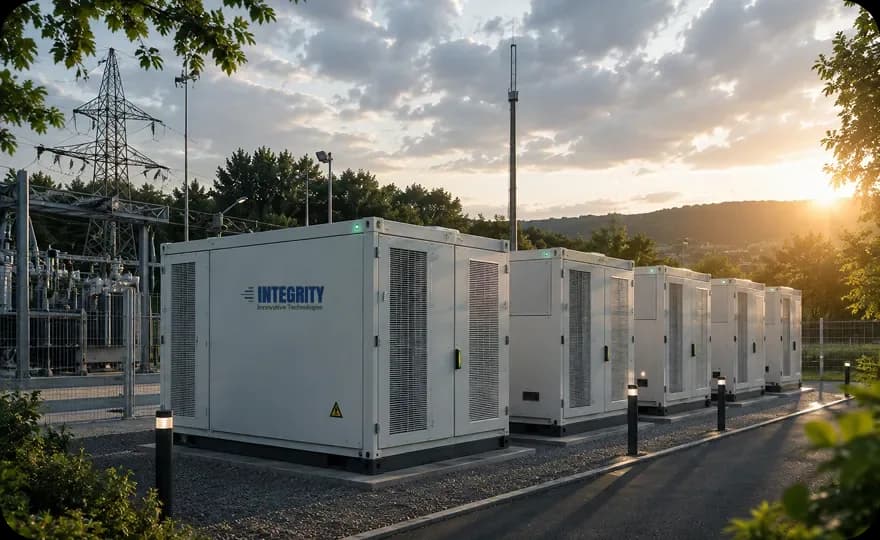
LFP's chemical structure is inherently more thermally stable than NMC, meaning it's far less prone to thermal runaway — a critical consideration once you're stacking megawatt-hours of batteries in a single enclosure.
It also tolerates deeper, more frequent cycling with less degradation, which matters enormously for commercial applications doing daily peak shaving or arbitrage rather than a single deep cycle per day.
The chemistry that wins in stationary storage isn't the one with the most energy density — it's the one that survives ten thousand cycles without complaint.
Four reasons LFP leads in stationary storage
- Thermal stability — a fundamentally safer failure mode than nickel-based chemistries.
- Cycle life — routinely rated for 6,000-plus cycles versus 3,000–4,000 for NMC.
- No cobalt — removing exposure to the most volatile and ethically fraught material in the supply chain.
- Lower energy density trade-off — acceptable in stationary applications where footprint matters far less than it does in a vehicle.
What this means for project owners
Lower degradation over the warranty period means the capacity you contract for on day one is closer to what you'll still have a decade later — a material difference in the economics of a 20-year asset.
Insurance and permitting are following the same trend, with LFP increasingly the default expectation for large-scale enclosures rather than a premium option.
The chemistry conversation in stationary storage has largely settled — the remaining questions are about system design, not cell selection.