





Projects
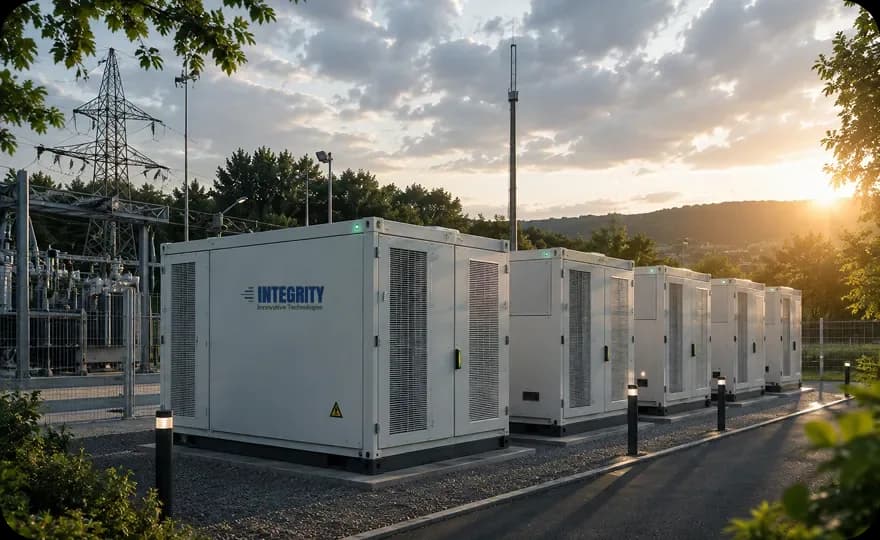
Inside a 40 MWh utility-scale deployment
A behind-the-scenes look at delivering grid-scale storage on time and under budget.

A 40 MWh battery installation looks straightforward on a single-line diagram. Delivering it on schedule, on budget, and ready to perform on day one is a very different story.
What actually determines the schedule
Long-lead equipment — transformers, switchgear, and battery enclosures — typically drives the critical path more than construction itself. Ordering before permitting is finalized, on a site that’s still being surveyed, is often the difference between an on-time energization and a six-month slip.
Interconnection studies are the other major variable. Utilities are managing a queue of projects far larger than their staff can process quickly, so early, well-documented applications consistently outperform technically superior but late ones.
On a utility-scale project, the schedule is won or lost months before the first container arrives on site.
Four things that separated this project from a typical build
- Early procurement — long-lead equipment ordered before permitting closed, based on a locked electrical design.
- Parallel workstreams — civil, electrical, and commissioning teams scheduled to overlap rather than run sequentially.
- Commissioning-first design — every enclosure specified with remote diagnostics built in, not added after the fact.
- Utility coordination — a dedicated point of contact through the entire interconnection process, not just at application and energization.
What ready-on-day-one actually means
Energization is not the finish line — it's the start of performance testing. A deployment that's truly ready on day one has already validated round-trip efficiency, response time, and fault behavior before the first dispatch instruction arrives from the grid operator.
That level of readiness comes from treating commissioning as a design requirement from the first day of engineering, not a punch list at the end of construction.
The projects that finish on time aren't the ones that avoid problems — they're the ones that surfaced every problem early enough to solve it without touching the schedule.